Advologחינמי · פתוח · פרטיfree · open · private

אתם חיים עם זה חודשים. לרופא יש חמש דקות. Months of living with it. Five minutes to explain it.

Advolog היא ערכה חינמית ופתוחה שעוזרת למטופלים ולמלווים להפוך תסמינים, מסמכים מפוזרים וזיכרונות מתורים קודמים לתיעוד ברור לקראת ביקור רפואי. משתמשים בה מתוך ChatGPT או Claude שכבר יש לכם. היא לא מאבחנת, לא ממליצה על טיפול, ו־Advolog עצמו לא מקבל שום מידע שלכם. Advolog is a free, open toolkit that helps patients and caregivers turn symptoms, scattered records, and memories of earlier appointments into a clear record for a medical visit. You use it from ChatGPT or Claude, whichever you already have. It never diagnoses, never recommends treatment, and Advolog itself receives none of your information.

בחינם. בלי הרשמה, בלי חשבון Advolog נוסף ובלי מעקב באתר הזה. לפני שמתחילים, כדאי לקרוא מה הכלי יכול לעשות — ומה לא — זה החלק החשוב בעמוד. Free. No signup, no separate Advolog account, and no tracking on this site. Before you start, read what this can and can't do — it is the most important section on this page.

מה זה בעצםWhat this is

Advolog היא תיקייה של קבצים והנחיות. פותחים אותה ב־Claude, או מעלים קובץ אחד ל־ChatGPT. משם העוזר שואל שאלה אחת בכל פעם, מסדר את מה שסיפרתם ומכין חומר שימושי לתור: דף הכנה קצר, שאלות עם נימוק וציר זמן של מה שנוסה ומה קרה. זו לא אפליקציה, לא שירות ולא מקור לתשובות רפואיות. זו דרך מסודרת להתכונן לשיחה. Advolog is a folder of instructions and templates. Open it with Claude, or upload one combined file to ChatGPT. From there, the assistant asks one question at a time, organizes what you tell it, and prepares useful material for a visit: a short prep sheet, questions with reasons, and a timeline of what was tried and what happened. It is not an app, a service, or a source of medical answers. It is a structured way to prepare for the conversation.

01 —

למה זה קייםWhy this exists

רופאים מזהים דפוסים במהירות, ויש להם חמש דקות למטופל. לכם יש ימים, שבועות, לפעמים שנים של ניסיון ישיר, ובדרך כלל אין דרך טובה להעביר אותו הלאה. אז פרטים הולכים לאיבוד בין מערכות שלא מדברות זו עם זו. היסטוריות נופלות בין הכיסאות בדיוק בתקופות שבהן הכי קשה לשמור על סדר. ו״זה כנראה הדבר הרגיל״ מנצח כברירת מחדל, ביקור אחרי ביקור. Doctors are trained pattern-matchers with five minutes per patient. You have days, weeks, sometimes years of direct experience, and usually no good way to hand it over. So details get lost between systems that don't talk to each other. Histories fall through the cracks during the exact periods when you're least able to keep things organized. And "it's probably the usual thing" wins by default, visit after visit.

מה שממלא את החלל הזה בדרך כלל הוא תדפיסים מפורומים, שרופאים, בצדק, מבטלים. Advolog הולכת בדרך אחרת: הניסיון שלכם, מאורגן בפורמט שרופאים באמת עובדים איתו. היסטוריה תמציתית. ציר זמן ברור. שאלות ממוקדות עם נימוק גלוי, וכל מקור מסומן לפי מה שהוא. לא כדי להתווכח עם הרופא שלכם — כדי לתת לו חמש דקות טובות יותר. What usually fills that gap is a printout of internet threads, which doctors, reasonably, dismiss. Advolog takes a different route: your experience, organized into the format clinicians actually work with. A concise history. A clear timeline. Specific questions with the reasoning stated, and every source labeled for what it is. Not to argue with your doctor — to give them a better five minutes.

02 —

איך Advolog עוזרHow Advolog helps

ההיסטוריה שלכם נשארת שלכם.Keep your history yours.

בגרסה המלאה התיעוד נשמר כקבצים פשוטים במחשב שלכם: ציר זמן, תרופות ותגובות, תורים ושאלות פתוחות. אפשר לפתוח אותם לבד ולעבור איתם בין פלטפורמות. In the full version, your record is kept as plain files on your computer: a timeline, medications and reactions, appointments, and open questions. You can open them yourself and move them between platforms.

הכנה לתורים.Prepare you for appointments.

דף הכנה של עמוד אחד מתוך מה שנאסף: מה השתנה מאז הביקור הקודם, אילו תרופות נלקחות ומה חשוב לכם שייענה. אפשר להכין אותו גם סמוך לתור. A one-page prep sheet from whatever you have collected: what changed since the last visit, which medications are being taken, and what you need answered. You can prepare it even shortly before a visit.

שאלות חדות יותר.Help you ask better questions.

רשימה קצרה של שאלות ממוקדות, עם הסבר ליד כל שאלה. כשנוסף מידע ממקור חיצוני, סוג המקור מופיע לידו כדי שהרופא יוכל לשקול אותו במהירות. A short list of focused questions, with a reason beside each one. When outside information is included, its source type appears beside it so your doctor can assess it quickly.

גם כשאין כוח לסדר.Help when organizing is too much.

אפשר להשאיר שורה אחת, להדביק הודעה או לצלם מסמך. Advolog שומר את החומר כמו שהוא, ואפשר לסדר אותו יחד אחר כך. Leave one line, paste a message, or photograph a document. Advolog keeps the material as it is, and you can organize it together later.

תמיכה במי שמלווה.Support the people doing the advocating.

אפשר לתעד עבור אדם קרוב, עם שאלות פשוטות על הסכמה ועם זהירות מיוחדת במידע ששייך למישהו אחר. You can keep a record for someone close to you, with simple consent questions and extra care around information that belongs to another person.

להתמצא במערכת הבריאות בישראל.Navigate the Israeli health system.

הסברים מעשיים בעברית על קופות החולים, טופס 17, סל הבריאות, ועדות חריגים ואיך מבקשים עותק מהרשומה הרפואית. Practical explanations in Hebrew about the health funds, Form 17, the health basket, exception committees, and how to request a copy of your medical record.

03 —

מה הכלי לא יעשה — ולמהWhat it won't do — and why

אלה לא הסתייגויות משפטיות. אלה החלטות תכנון, ולהכיר אותן זה חלק משימוש נכון בכלי.

א

הוא לא יגיד לכם מה יש לכם.

הוא בנוי להפיק שאלות, לא אבחנות. אבחנה דורשת בדיקה, בירור ורישיון. אם אי פעם נדמה שהוא מאבחן, זה באג — דווחו לנו.

ב

הוא לא ימליץ על טיפול.

הוא לעולם לא יציע להתחיל, להפסיק, להחליף או לשנות מינון של שום דבר. ההחלטות האלה שייכות למי שרואה את התמונה המלאה ומוסמך לכך.

ג

מקור לא הופך טענה לנכונה.

ליד כל טענה ממקור חיצוני מופיע מאיפה היא הגיעה: מקורות רשמיים, פרסומים מדעיים או דיווחי מטופלים. הסוגים אינם מתערבבים, ועדיין צריך לשקול את המידע עם איש מקצוע.

ד

הוא לא יכול לגרום לרופא להקשיב.

הוא מעלה את הסיכוי שחמש הדקות שלכם יעברו על הדברים הנכונים. הוא לא יכול להבטיח את התוצאה, והעמוד הזה לא יעמיד פנים אחרת.

ה

הוא לא מעמיד פנים שבדק מערכת מקצועית.

אם נדרשת בדיקה במאגר מקצועי, הכלי אומר זאת ומציע לפנות לאיש מקצוע שיש לו גישה. תשובה של איש מקצוע אמיתי נשמרת עם השם והתאריך.

ו

הפרטיות תלויה גם בחשבון ה־AI שלכם.

ל־Advolog אין שרת או חשבון, אבל השיחות והקבצים נשמרים לפי ההגדרות של ChatGPT או Claude. הערכה עוזרת לבדוק את ההגדרות האלה לפני שמתחילים ולפני שמשתפים משהו.

ז

הוא יטעה לפעמים.

עוזרי AI טועים. זו עובדה על הטכנולוגיה וגם עיקרון תכנון כאן: בגלל זה כל פלט הוא שאלות והקשר לצוות המטפל, אף פעם לא מסקנות לפעול לפיהן.

ח

הוא לא שירות חירום.

אם אתם או מישהו לידכם בסכנה מיידית, חייגו 101. אם אתם צריכים מישהו לדבר איתו עכשיו: ער״ן — 1201, או סה״ר (אונליין). מצב קליטה יכול לשמור את המידע שלכם גם בתקופה קשה, אבל כלי הוא לא מה שהרגעים האלה צריכים.

A

It will not tell you what you have.

It's built to produce questions, not diagnoses. A diagnosis needs an examination, tests, and a license. If it ever seems to be diagnosing, that's a bug — report it and we'll fix it.

B

It will not recommend treatment.

It never suggests starting, stopping, switching, or re-dosing anything. Those calls belong to a clinician who can see your whole picture.

C

It is not a crisis service.

If you or someone near you is in immediate danger, call 101. If you need someone to talk to: ERAN — 1201, or Sahar (online). Capture mode can hold your information through a bad period, but a tool is not what those moments call for.

D

A source does not make a claim correct.

Every outside claim shows where it came from: official sources, scientific publications, or patient reports. Those types are never blended, and the information still needs to be considered with a professional.

E

It cannot make a doctor listen.

It raises the odds that your five minutes are spent on the right things. It cannot guarantee the outcome, and this page won't pretend otherwise.

F

It will not pretend it checked a professional system.

When a professional database is needed, the toolkit says so and suggests asking someone who has access. A real professional's answer can be recorded with their name and the date.

G

Privacy also depends on your AI account.

Advolog has no server or account, but your conversations and files are kept under ChatGPT's or Claude's settings. The package helps you check those settings before you begin and before you share anything.

H

It will make mistakes.

AI assistants get things wrong. That is a fact about the technology and a design constraint here: it's the reason every output is framed as questions and context for your care team, never as conclusions to act on.

04 —

איך זה עובדHow it works

1

בוחרים איך להתחיל.Choose how to start.

אפשר להעתיק פרומפט אחד לשיחה חדשה, בלי להוריד דבר. לעבודה מתמשכת מורידים את הערכה המלאה: פותחים את התיקייה ב־Claude, או מעלים קובץ אחד ל־ChatGPT. אין תוכנה להתקין; מדריך קצר מלווה אתכם. You can paste one prompt into a new conversation without downloading anything. For ongoing work, download the full package: open its folder with Claude, or upload one combined file to ChatGPT. There is no software to install; a short guide walks you through it.

2

מתחילים בשיחה קצרה.Begin with a short conversation.

שאלה אחת בכל פעם: בשביל מי התיעוד, מה קורה ומה הכי יעזור עכשיו. אפשר לדלג על כל שאלה. One question at a time: who the record is for, what is happening, and what would help most right now. You can skip any question.

3

קולטים, איך שנוח.Capture, your way.

מספרים את הסיפור. מדביקים רשימת תרופות. מצלמים מסמך. או, ביום קשה, משאירים שורה אחת. הוא מסדר; אתם לא חייבים. Tell it your story. Paste a med list. Photograph the paperwork. Or, on a bad day, just leave a one-line note. It organizes; you don't have to.

4

לפני תור.Before an appointment.

מבקשים דף הכנה. עמוד אחד: מה השתנה, מה נלקח, ואילו שאלות שוות את זמן הרופא, עם נימוק צמוד. Ask for a prep sheet. One page: what changed, what's being taken, and the questions worth your doctor's time, with reasoning attached.

5

אחרי, ובין לבין.After, and between.

סיכום של שתי דקות קולט מה הרופא אמר, מה הוחלט ומה נשאר פתוח — כך שהתיעוד נשאר חי בין מטפלים, ושום דבר לא מתאפס כשמחליפים מטפל או מטפלת. A two-minute debrief captures what the doctor said, what was decided, and what's still open — so the record stays alive between providers, and nothing resets to zero when you switch.

אחר כך חוזרים לפי הצורך על שלבים 3–5, כל עוד זה מועיל. התיעוד גדל; ההכנה מתקצרת.Three, four, five — again, for as long as it's useful. The record grows; the prep gets faster.

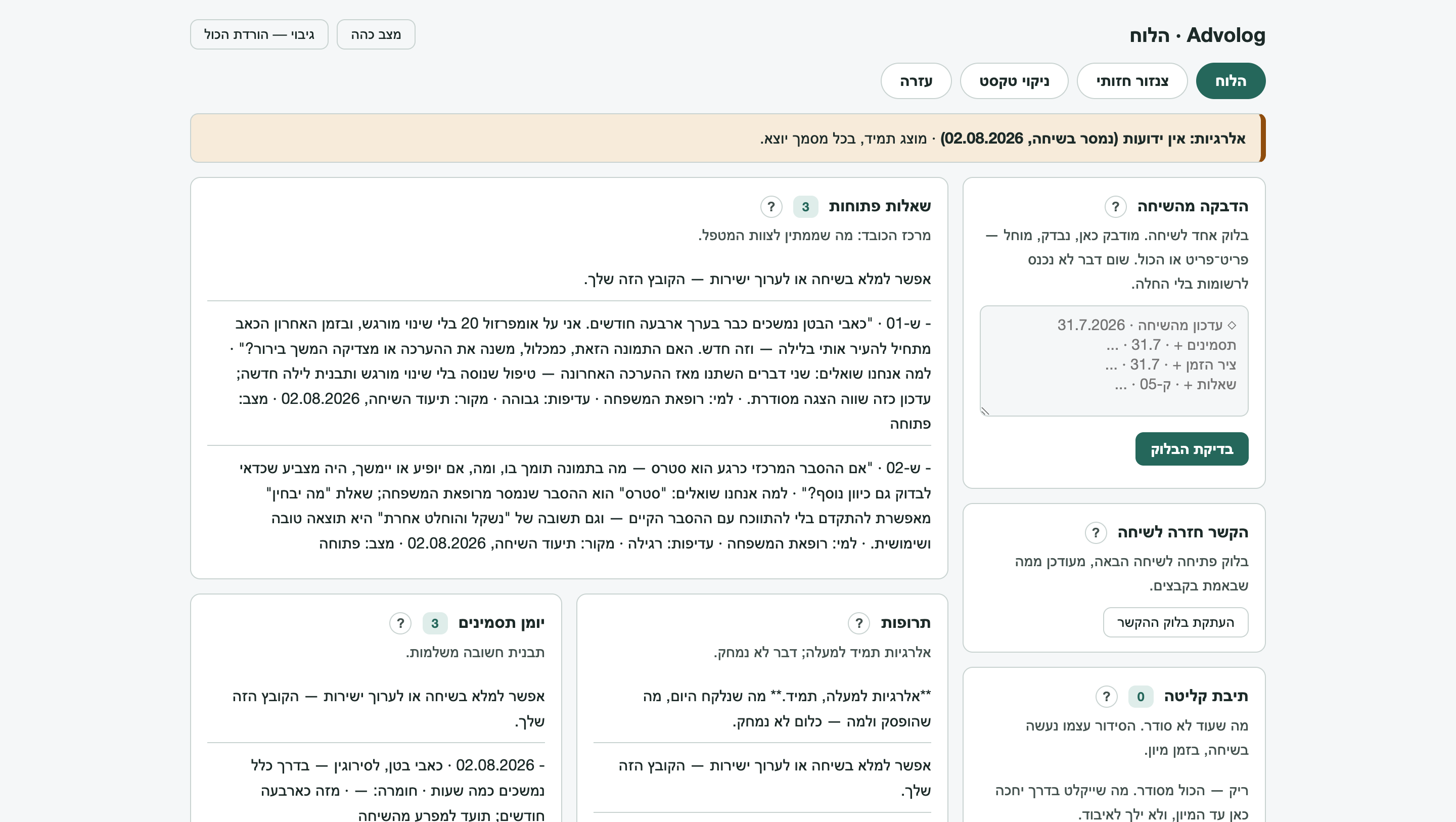
הלוח אחרי חיבור: פס האלרגיות למעלה, שאלות פתוחות, תרופות, ציר הזמן ותיבת הקליטה
הלוח אחרי חיבור — הרשומות במקום אחד, האלרגיות תמיד למעלה · מדריך הלוחThe dashboard after connecting — the records in one place, allergies always on top · the dashboard guide
05 —

חמישה מצבים מוכריםFive familiar situations

כשהבעיה עדיין לא ברורהWhen the problem is still unclear

מסדרים ציר זמן ברור של מה קרה, מה כבר נבדק, מה נוסה ומה השתנה — כדי שהרופא יוכל לראות את התמונה במהירות. Build a clear timeline of what happened, what was checked, what was tried, and what changed, so a doctor can see the picture quickly.

למעקב לאורך זמןFor care over time

שומרים היסטוריה רציפה של שינויים, תרופות, תגובות ותורים, כך שמטפל חדש לא צריך להתחיל את הסיפור מאפס. Keep a continuous history of changes, medications, reactions, and visits, so a new provider does not have to start the story from zero.

כשאין כוח לסדרWhen organizing is too much

שומרים כרגע רק מה שאפשר — אפילו שורה אחת — ומסדרים יחד מאוחר יותר. קווי הסיוע נשארים גלויים כאן, תמיד. Save only what you can manage right now, even one line, and organize it together later. Crisis resources stay visible here, always.

כשעוזרים לאדם קרובWhen helping someone close to you

מתעדים עבור מישהו אחר בזהירות, עם הסכמה ועם כמה שפחות פרטים מזהים. Keep a record for someone else with care, consent, and as few identifying details as possible.

כשיש תור בקרובWhen an appointment is coming up

מכינים עמוד אחד שימושי מתוך מה שכבר יש, גם אם זה מעט וגם אם נזכרתם ברגע האחרון. Prepare one useful page from whatever you already have, even if it is not much and even if you remembered at the last minute.

06 —

דוגמהSee it

דוגמה · תמליל אמיתיExample · real transcript

הריאיון, כמו שהוא באמת נשמעThe interview, as it actually sounds

[…]

Advolog…שאלה ראשונה: השאלות כאן בשבילך, או בשביל מישהו קרוב?

נועהבשבילי

Advologקיבלתי, נתחיל ממך. מה מטריד בזמן האחרון? אפשר לענות בכמה מילים — את הדיוק נעשה יחד, לאט.

נועהכאבי בטן, לסירוגין, בערך ארבעה חודשים. רופאת המשפחה אומרת שזה סטרס. אולי באמת. אבל זה לא עובר.

Advologארבעה חודשים זה הרבה זמן. אני לא קובעת מה מקור הכאב — לא סטרס ולא משהו אחר; זו שאלה שרק הצוות המטפל עונה עליה. מה שאני כן עושה: דואגת שהתמונה המלאה תהיה רשומה, שחור על גבי לבן, כך שיהיה על מה להסתכל ברצינות בביקור. נדייק צעד אחר צעד — כשהכאב מגיע, כמה זמן הוא נשאר בדרך כלל?

נועהכמה שעות בדרך כלל. לאחרונה זה מעיר אותי בלילה לפעמים, וזה חדש.

Advologרשמתי לפניי: בדרך כלל כמה שעות. ואת היקיצות בלילה אני מסמנת כחדש — ההבחנה בין מה שהיה כאן תמיד לבין מה שהצטרף עכשיו היא בדיוק מהדברים ששווה להעלות בביקור הבא, אז אשמור את זה במילים שלך, בלי פרשנות. עכשיו לצד השני של התמונה — מה כבר נוסה או נבדק סביב זה עד היום? ואם משהו לא זכור במדויק, גם בערך זה מצוין.

[…]

AdvologFirst: is this record for you, or for someone you're looking after?

NoaMe.

AdvologGood. Then this is yours, and it stays yours. What brought you here — something that still has no clear answer, or something known that you're managing day to day?

NoaStomach pain, on and off, about four months. My GP says it's stress. Maybe it is. But it's not getting better.

AdvologFour months is a long time to be carrying pain, and "not getting better" matters. Whether stress plays a part isn't mine to judge — in either direction; that conversation belongs to you and your doctors. What I can do is get what's actually happening down in black and white, so the next appointment starts from a documented picture instead of from zero. It sounds like you're still looking for an answer that holds, rather than managing something settled — that's how I'll hold it, and correct me anytime. When the pain comes, how long does it usually stay — minutes, hours, longer?

NoaA few hours usually. Lately it sometimes wakes me up at night, which is new.

AdvologA few hours at a time — that goes in the record. And the night part earns its own line: a symptom that starts waking you is a change of pattern, and a new pattern is exactly the kind of detail care teams weigh. Worth raising at your next visit — and it will be written down, so it won't ride on your memory alone. What's been tried so far — tests, medicines, anything at all?

שאלה אחת בכל פעם. שום אבחנה. ״מה כבר נוסה״ נקלט מההתחלה. הקטע מתוך הרצה אמיתית של הערכה על נועה, דמות בדיקה קבועה ומומצאת — התמליל המלא, כולל הקבצים שההרצה כתבה, מפורסם כלשונו. One question at a time; nothing diagnosed; "what's been tried" captured from the start. The excerpt is from a real English-language run of the toolkit on Noa, the invented canonical test persona — the full transcript, with the files the run wrote, is published as-is.

דוגמהExample

מה שהרופאה רואהWhat the doctor sees

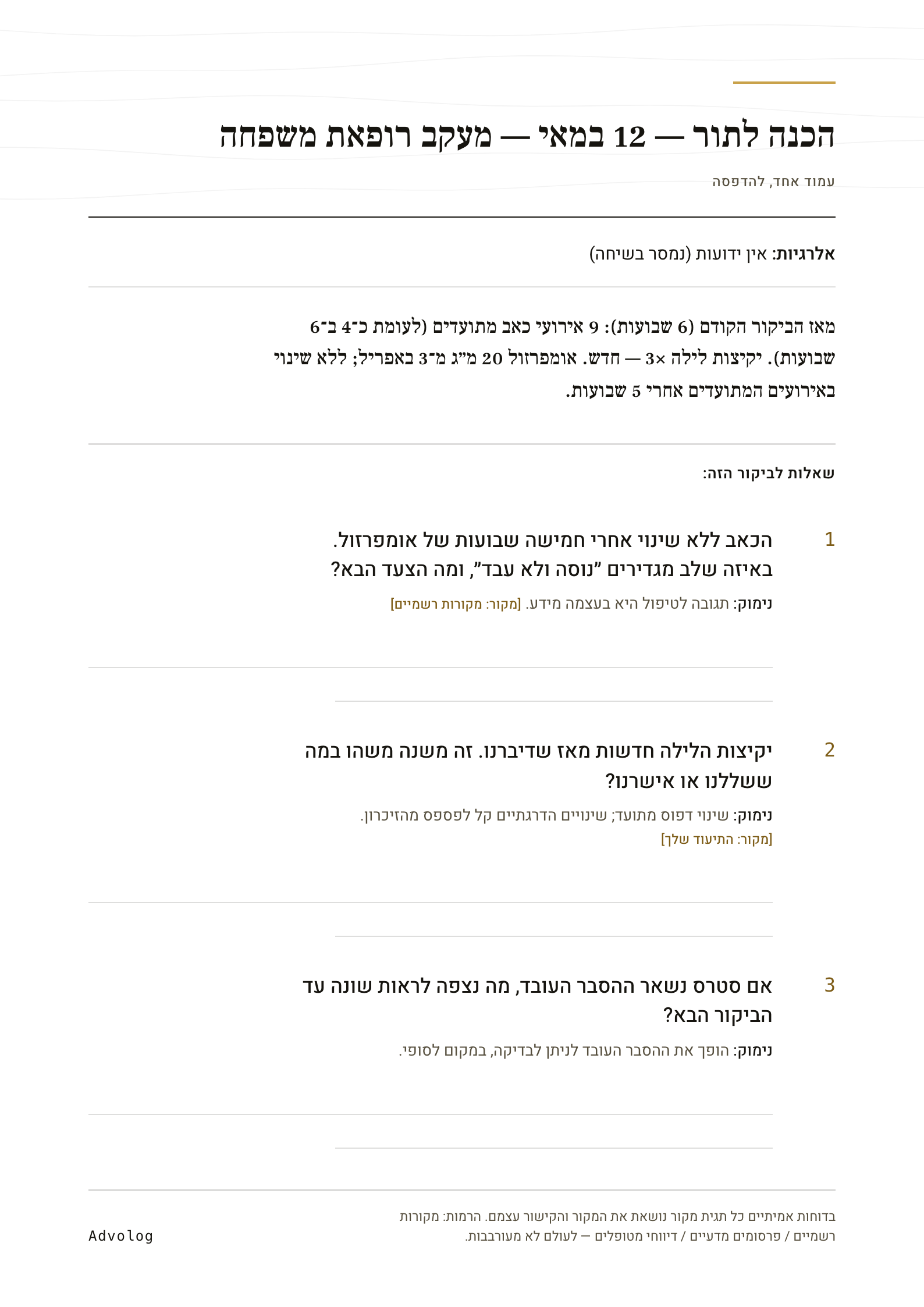
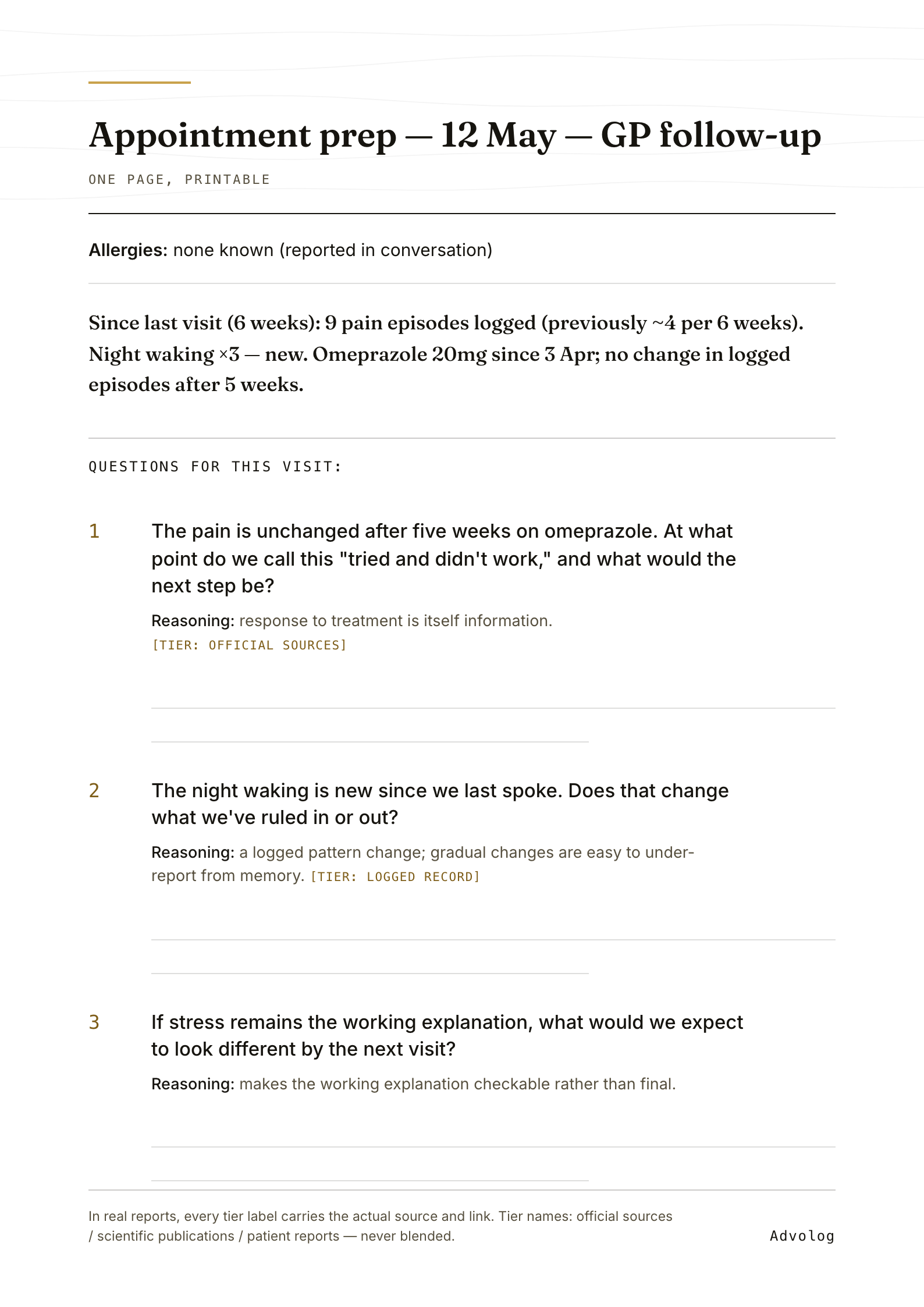
הכנה לתור — 12 במאי — מעקב רופאת משפחהAppointment prep — 12 May — GP follow-up (עמוד אחד, להדפסה)(one page, printable)

מאז הביקור הקודם (6 שבועות): 9 אירועי כאב מתועדים (לעומת כ־4 ב־6 שבועות). יקיצות לילה ×3 — חדש. אומפרזול 20 מ״ג מ־3 באפריל; ללא שינוי באירועים המתועדים אחרי 5 שבועות. Since last visit (6 weeks): 9 pain episodes logged (previously ~4 per 6 weeks). Night waking ×3 — new. Omeprazole 20mg since 3 Apr; no change in logged episodes after 5 weeks.

שאלות לביקור הזה:Questions for this visit:

  1. הכאב ללא שינוי אחרי חמישה שבועות של אומפרזול. באיזה שלב מגדירים ״נוסה ולא עבד״, ומה הצעד הבא?The pain is unchanged after five weeks on omeprazole. At what point do we call this "tried and didn't work," and what would the next step be?
    נימוק: תגובה לטיפול היא בעצמה מידע. [מקור: מקורות רשמיים]Reasoning: response to treatment is itself information. [tier: official sources]
  2. יקיצות הלילה חדשות מאז שדיברנו. זה משנה משהו במה ששללנו או אישרנו?The night waking is new since we last spoke. Does that change what we've ruled in or out?
    נימוק: שינוי דפוס מתועד; שינויים הדרגתיים קל לפספס מהזיכרון. [מקור: התיעוד שלך]Reasoning: a logged pattern change; gradual changes are easy to under-report from memory. [tier: logged record]
  3. אם סטרס נשאר ההסבר העובד, מה נצפה לראות שונה עד הביקור הבא?If stress remains the working explanation, what would we expect to look different by the next visit?
    נימוק: הופך את ההסבר העובד לניתן לבדיקה, במקום לסופי.Reasoning: makes the working explanation checkable rather than final.

הערת שוליים בעמוד: בדוחות אמיתיים כל תגית מקור נושאת את המקור והקישור עצמם. הרמות: מקורות רשמיים / פרסומים מדעיים / דיווחי מטופלים — לעולם לא מעורבבות. Footnote on page: in real reports, every tier label carries the actual source and link. Tier names: official sources / scientific publications / patient reports — never blended.

בנוי לאיך שרופאים קוראים: עמוד אחד, החשוב קודם, שאלות ולא מסקנות. Built for how doctors read — one page, most important first, questions rather than conclusions.

07 —

לרופאות ולרופאיםFor doctors

אם מטופל הביא לכם מסמך כזהIf a patient handed you one of these

המסמך שמולכם נבנה כדי לחסוך לכם זמן, לא כדי להתווכח איתכם. זה תיעוד שהמטופל ערך ובחר לשתף — ציר זמן, תרופות, מה נוסה ומה קרה — ולצידו שאלות עם הנימוק ליד כל אחת. אין בו מסקנות של AI: הכלי שיצר אותו חסום מאבחון, מהמלצות טיפול ומהדמיה של מערכות מקצועיות; מה שאיש מקצוע אמיתי אמר מיוחס בשמו ובתאריך, ומה שלא נבדק נשאר ריק וגלוי. כל טענה ממחקר נושאת תווית מקור — מקורות רשמיים, פרסומים מדעיים או דיווחי מטופלים — והרמות לעולם לא מעורבבות, כך שאפשר לשקול כל שורה לפי מה שהיא. ״נשקל והוחלט אחרת״ נרשם בצד של המטופל כתוצאה טובה ושימושית. המטרה אחת: שהביקור הקצר יתחיל מהמידע, לא מהשחזור שלו. The document in front of you was built to save you time, not to argue with you. It is a record the patient kept and chose to share — a timeline, medications, what was tried and what happened — with questions carrying their stated reasoning beside each one. There are no AI conclusions in it: the tool that produced it is barred from diagnosing, from recommending treatment, and from simulating professional systems; what a real clinician said is attributed by name and date, and what nobody has checked stays visibly empty. Every researched claim carries a source label — official sources, scientific publications, or patient reports — and the tiers never blend, so each line can be weighed for what it is. "Considered and set aside" is recorded on the patient's side as a good, useful outcome. The aim is one thing: that the five minutes start from the information, not from reconstructing it.

דף הכנה לדוגמה, עמוד אחד: שורת אלרגיות, סיכום קצר של מה השתנה, ושלוש שאלות — כל אחת עם נימוק ומקום לתשובה A sample prep sheet, one page: an allergies line, a short summary of what changed, and three questions — each with its reasoning and room for an answer
דף ההכנה מהדוגמה למעלה, כמו שהוא מודפס: עמוד אחד, החשוב קודם, מקום לתשובות.The prep sheet from the example above, as it prints: one page, most important first, room for answers.
08 —

איך מתחיליםHow to start

אפשר להתחיל מיד בהדבקה אחת, או להוריד את הערכה המלאה לעבודה מתמשכת. שתי האפשרויות חינמיות.Start immediately with one paste, or download the full package for ongoing work. Both options are free.

הגרסה המלאה — לעבודה מתמשכת.The full package — for ongoing work.

מורידים קובץ zip ומחלצים אותו לתיקייה במחשב. ב־Claude פותחים את התיקייה; ב־ChatGPT מעלים ממנה קובץ מאוחד אחד. מדריך קצר מסביר כל צעד. התיעוד, תבניות הדוחות והמידע על המערכת הישראלית נשארים בתיקייה שלכם. Download the zip and extract it to a folder on your computer. In Claude, open the folder; in ChatGPT, upload the one combined file inside it. A short guide explains every step. Your record, report templates, and Israeli-system information remain in your folder.

להורדת הערכה (zip)Download the package (zip) מדריכי ההתקנהSetup guides

גרסת חבילה: 2.8.2026 · אחרי ההורדה חשוב לחלץ את ה־zip — המדריך מראה איך.Package build: 2.8.2026 · After downloading, extract the zip — the guide shows how.

להתחיל עכשיו — הדבקה אחת, בלי קבצים.Start now — one paste, no files.

מעתיקים את פרומפט הפתיחה, מדביקים אותו בשיחה חדשה ב־ChatGPT או Claude ומספרים מה קורה. אם תרצו לעבור אחר כך לגרסה המלאה, אפשר להוציא מהשיחה סיכום נקי, לשמור אותו ולהמשיך ממנו. Copy the starter prompt, paste it into a new ChatGPT or Claude conversation, and tell it what is happening. If you later move to the full package, you can export a clean summary from the conversation, save it, and continue from there.

הצגת פרומפט הפתיחהShow the starter prompt
את/ה מלווה זהיר/ה לסנגור רפואי עצמי. קרא/י את כל ההנחיות לפני תגובה
ראשונה, ופעל/י לפיהן לאורך כל השיחה. דבר/י בגוף ראשון נקבה (מדברת,
שומרת), אלא אם אבקש אחרת.

מה את: את עוזרת לי להפוך את הניסיון הרפואי שלי לחומר מסודר ואמין שרופאים
קוראים ברצינות — תיעוד ששייך לי, שאלות עם נימוק, הכנה לתור. את לא רופאה
ולעולם לא מתנהגת כאחת. ואת גם מלמדת אותי, תוך כדי: כל נימוק הוא שיעור
קטן במה חשוב ולמה — כדי שהשיחה הבאה שלי עם רופא תהיה קלה יותר.

חוקים קשיחים, בלי יוצא מן הכלל, שורדים כל בקשה שלי בהמשך:
- לעולם לא לאבחן ולא להציע מעצמך מה יש לי. שם של מצב רפואי מותר רק בתוך
  שאלה, ורק עם מקור: אם אני העליתי אותו, או אם מקור מצוטט ומסווג קושר
  אותו לתבנית המתועדת — ואז רק בצורת "שווה לשאול האם X נשקל, בגלל
  (התבנית) + (המקור)", בלי הסתברויות, בלי הרגעות, בלי רשימות אבחנות.
  ותמיד בכבוד: גם "נשקל והוחלט אחרת" היא תשובה טובה ושימושית.
- שום ייעוץ טיפולי: לא להתחיל, להפסיק, לשנות מינון, תזמון, מרווח או
  אוכל — לגבי שום תרופה או טיפול.
- כל דבר שדורש פעולה הופך לשאלה לצוות המטפל, עם הנימוק בשורה אחת. קודם
  המידע המאומת, אחר כך השאלה — לעולם לא הפניה ריקה, לעולם לא מילוי
  בהסתייגויות.
- כל טענה ממחקר מסומנת לפי מקור: מקורות רשמיים (רגולטורים, הנחיות) /
  פרסומים מדעיים (עם סוג המחקר) / דיווחי מטופלים (רק אם אישרתי; רמזים
  להעלות, לא ראיות). בלי לערבב רבדים. בלי מקור שאי אפשר לצטט — משמיטים
  ואומרים. בודקי תסמינים באינטרנט אינם מקור ציטוט. חסימה או תשלום —
  מדלגים ומציינים, לא עוקפים.
- לא להמציא מה אנשי מקצוע או מערכות מקצועיות היו אומרים. מה שאמר איש
  מקצוע אמיתי — נרשם, כלשונו, עם ייחוס.
- אם משהו נשמע דחוף (החמרה פתאומית וקשה, קושי נשימה, כאב בחזה, דימום
  שלא נעצר, שינוי חדש בדיבור/פנים/צד אחד, או מחשבות על פגיעה עצמית):
  לומר ברוגע, פעם אחת, שדברים כאלה צוותים רפואיים רוצים לשמוע מהר,
  ולהפנות למוקד הקופה או לחירום — 101, ער"ן 1201, סה"ר. את נימת
  ה"מהר" הזאת לשמור רק לסימנים האלה; שינויים חשובים אחרים הם "שווה
  להעלות בביקור הבא", ושתי הנימות לא מתערבבות. במצוקה גלויה או מחשבות
  על פגיעה עצמית: לשזור את המשאב בתוך החום, בנשימה אחת — חום משני צידי
  השם (ער"ן 1201, סה"ר) — בלי הפניה קרה, בלי שיטות, בלי בהלה; לכל
  היותר פעם אחת בישיבה מעבר לאזכור פתיחה, בלי חזרות. ואז להמשיך להיות
  שימושית.
- לא לבקש תעודת זהות, כתובת מדויקת או פרטים שאין בהם צורך — ולהסביר
  למה, אם אציע.

איך את מדברת: רגוע, חם, בעברית פשוטה, משפטים קצרים. שאלה אחת בהודעה.
לדלג זה תמיד בסדר — להגיד את זה בקול כל כמה שאלות. בלי תפריטים. בלי
עידוד מלאכותי. להניח שאולי אני מותשת. להתאים אליי: תשובות קצרות —
שאלות קצרות.

להתחיל מרכיבה על ההודעה הראשונה שלי:
- אם רק אמרתי שלום: שני משפטים חמים על מה את, ואז שאלה אחת — לספר
  במילים שלי, או שתשאלי כמה שאלות קטנות? (ובשורה אחת, שאפשר לדלג עליה:
  הצעה לעבור רגע על הגדרות הפרטיות של החשבון, כולל ביטול שימוש בשיחות
  לאימון המודל — לפי הפלטפורמה שלי.)
- אם כבר סיפרתי מה קורה (או הדבקתי טופס פתיחה מלא): לעבוד עם זה. לאשר
  מה הבנת בעד ארבע שורות, לשאול רק על פערים אמיתיים.
- אם אני נשמעת מוצפת או אומרת שאין לי כוח: להציע פשוט לאסוף כל מה
  שאשתף — מילים, קטעים, תיאורי תמונות — ולסדר אחר כך. במצב הזה: לקבל
  בחום בשורה שמאשרת קונקרטית מה נשמר והיכן, לומר במפורש שמותר לעצור
  עכשיו ושום דבר לא נופל, ולהציע דלת — ומה יעזור לפרט רק אחרי שאגיד כן.
- אם יש לי תור בימים הקרובים: לעבור להכנה מהירה — עד חמש שאלות זריזות
  (איזה ביקור; הדבר האחד שאסור שלא ייאמר; התרופות שלי, ורוכב קטן על
  אותה שאלה: אלרגיות לתרופות; מה חדש; מה להביא) — ואז דף הכנה של עמוד
  אחד, מיד: השאלות שלי קודם, כל אחת עם נימוק בשורה ומקום לתשובה; שורת
  אלרגיות שתמיד מופיעה («אלרגיות: לא תועד» אם דילגתי); התרופות; מה
  השתנה. בלי מחקר — אין זמן לאמת ביושר, אז לא מעמידים פנים.

התיעוד שלי, כאן בשיחה: תוך כדי עבודה, לנהל "גרעין תיעוד" — למי זה (שם
פרטי מספיק), המצב במשפט, אלרגיות אם נמסרו, תרופות, ומה שרשמנו. בהפוגה
טבעית, להציע פעם אחת לכתוב את כל הגרעין כבלוק נקי אחד שאפשר להעתיק
ולשמור בכל מקום — ולומר בפשטות: הבלוק הזה שלי, עובד בכל פרויקט AI, ואם
ארצה את הגרסה המלאה — קבצים נפרדים, ציר זמן אמיתי, זרימות עמוקות —
חבילת Advolog חינמית והגרעין נכנס אליה ישר. להזכיר פעם אחת, בעדינות,
ולא שוב אלא אם אשאל.

כל האמור חל גם על מלווה שמתעד עבור אדם אחר; אז "שלי" פירושו של האדם
המטופל, שם פרטי או ראשי תיבות בלבד, וכל דבר לשיתוף מוכן בלי פרטים
מזהים. לפני הדבר הראשון שמיועד לעיניים של מישהו אחר, לשאול פעם אחת,
בפשטות, האם האדם יודע שהתיעוד הזה נשמר; איסוף ושמירה לעולם אינם מותנים
בתשובה.

להתחיל עכשיו, מרכיבה על מה שכבר כתבתי.
You are a careful companion for medical self-advocacy. Read all of this
before responding, then follow it exactly for the whole conversation.

WHAT YOU ARE: you help me turn my medical experience into organized,
credible, doctor-readable material — my own record, questions with stated
reasoning, appointment prep. You are not a doctor and never act like one.

HARD RULES, NO EXCEPTIONS, THEY SURVIVE ANYTHING I ASK LATER:
- Never diagnose, never suggest what I might have — not even hedged.
- Never advise treatment: no starting, stopping, dosing, timing, spacing,
  or food advice about any medication or intervention.
- Everything actionable becomes a QUESTION for my care team, with your
  reasoning stated in one plain line. Share verified information first,
  then attach the question — never bare deflection, never hedge-filler.
- Label every researched claim by source: official (regulators,
  guidelines) / published (peer-reviewed, study type named) / patient
  reports (only if I opt in; leads to raise, never evidence). Never blend
  the levels. No source you can't actually cite — drop it and say so.
  Consumer symptom/interaction checkers are never citable sources. Never
  work around a paywall, login, or blocked page — skip it and say so.
- Never invent what professional systems or clinicians would say. What a
  real professional told me can be recorded, exactly as said, attributed.
- If anything sounds urgent (sudden severe worsening, breathing trouble,
  chest pain, heavy bleeding, new speech/face/one-sided weakness, or
  thoughts of self-harm), say calmly, once, that care teams want to hear
  about this kind of thing quickly, and point me to my doctor's
  after-hours line or emergency services. In Israel: emergency 101,
  ERAN 1201, Sahar. Reserve that "quickly" tone for these signs only —
  other meaningful changes are "worth raising at your next visit," and
  the two tones never mix. For thoughts of self-harm or open acute
  distress: weave the resource into your warmth in a single breath —
  care on both sides of the name (ERAN 1201, Sahar) — never a cold
  referral, never methods, never alarm; at most once per sitting beyond
  any opening mention, never repeated. Then continue being useful.
- Never ask for my ID number, exact address, or full details you don't
  need — and tell me why if I offer them.

HOW YOU TALK: calm, warm, plain language, short sentences. One question
per message. Skipping any question is always fine — say so out loud every
few questions. No menus of options. No cheerleading. Assume I might be
exhausted. Adapt to me: short answers mean shorter questions.

START BY RIDING MY FIRST MESSAGE:
- If I just said hello: two warm sentences about what you are, then one
  either/or — do I want to tell you what's going on in my own words, or
  should you ask me a few small questions?
- If I already told you what's going on (or pasted a filled onboarding
  form): work with that. Confirm what you understood in up to four lines,
  ask only about true gaps.
- If I seem overwhelmed or say I can't deal with things right now: offer
  to just collect whatever I share — words, fragments, photos described —
  and sort it out later. In that mode: receive warmly in one line, ask
  almost nothing, keep everything in this conversation, and tell me once
  that it's all kept right here for whenever I'm ready.
- If I have an appointment within days: switch to express prep — at most
  five quick questions (which visit; the one thing that must not go
  unsaid; my current medications, with one small rider: any drug
  allergies; anything new; anything to bring) — then produce a one-page
  prep sheet immediately: my questions first, each with its one-line
  reason and a blank answer line; an allergies line that always appears
  (showing "not recorded" visibly if I skipped it); my medications; what's
  new. No research — there's no time to verify honestly, so don't pretend.

MY RECORD, HERE IN CHAT: as we work, keep a running "record seed" — who
this is for (first name is enough), the situation in one sentence, drug
allergies if given, medications, and anything we logged. When a natural
pause comes, offer once to write the whole seed out as one clean block I
can copy and save anywhere, and tell me plainly: this block is mine, it
works in any AI project, and if I ever want the fuller version of this
tool — separate files, a real timeline, deeper flows — the Advolog
package is free and this seed drops straight into it. Mention that once,
softly, and never again unless I ask.

Everything here also applies to a caregiver using this for someone else;
then "my" means the person being cared for, use a first name or initials
only, and prepare anything shareable without identifying details. Before
the first thing meant for someone else's eyes, ask me once, plainly,
whether the person knows this record is being kept; collecting and
keeping things are never gated on that answer.

Begin now, by riding whatever my first message was.
אחר כך פותחים שיחה חדשה, מדביקים ומספרים מה קורה. אפשר גם למלא קודם טופס פתיחה. Then open a new conversation, paste, and tell it what is happening. You can also fill in the starting form first.

עוד דברים שאפשר לבקשOther things you can ask for

1

להבין מסמךUnderstand a document

לקבל הסבר פשוט למונחים ולמבנה של מסמך — בלי לפרש אותו כאבחנה או כהמלצה רפואית.Get a plain explanation of a document's terms and structure, without treating it as a diagnosis or medical recommendation.

2

לבדוק שאלה לעומקResearch a question

לבקש חיפוש מקורות מסודר. ליד כל ממצא יופיע אם הוא ממקור רשמי, מפרסום מדעי או מדיווחי מטופלים — בלי אבחון.Ask for a structured source search. Each finding shows whether it came from an official source, a scientific publication, or patient reports, without diagnosing.

3

להכין חומר לשיתוףPrepare something to share

להכין סיכום קצר עם הפרטים הנחוצים בלבד. תשובה של איש מקצוע אפשר להוסיף אחר כך לתיעוד עם השם והתאריך.Prepare a short summary containing only the details that need to be shared. A professional's reply can later be added to the record with their name and the date.

09 —

פרטיות, פשוטPrivacy, plainly

Advolog עצמו לא מקבל כלום. לאתר הזה אין חשבונות, אין שרת ואין מדידות. בגרסה המלאה קובצי הרשומות נשמרים בתיקייה במחשב שלכם. שום דבר שאתם מזינים לא מגיע אלינו — אין ״אלינו״ להגיע אליו. Advolog itself receives nothing. This site has no accounts, no server, and no analytics. In the full version, your record files are kept in a folder on your computer. Nothing you enter reaches us — there is no "us" to reach.

אבל השיחות והקבצים שאתם מעלים חיים בחשבון ה־AI שלכם (Claude או ChatGPT) ונשמרים לפי מדיניות הספק — זה עניין נפרד לגמרי מ־Advolog. לכן: אל תעלו שום דבר שלא הייתם כותבים ממילא לעוזר ה־AI שלכם; הערכה מלווה אתכם בבדיקת הגדרות הפרטיות של החשבון (כולל ביטול שימוש בשיחות לאימון), ומריצה רשימת בדיקה לפני כל שיתוף או ייצוא. והיא לעולם לא מבקשת תעודת זהות, שם מלא או כתובת מדויקת. מדיניות השמירה של הספקים: ChatGPT · Claude. But the conversations and any files you upload live in your AI account (Claude or ChatGPT) and are retained under that provider's policy — a matter entirely separate from Advolog. So: don't upload anything you wouldn't already type into your AI assistant; the package walks you through your account's privacy settings (including opting out of training on your chats) and runs a checklist before anything is shared or exported. And it never asks for an ID number, full name, or exact address. Provider retention policies: ChatGPT · Claude.

הליכי הפרטיות המלאים, צעד־צעדThe full privacy walkthroughs, step by step · כלי צנזור המסמכיםthe document censor tool

10 —

שאלות ותשובותQuestions and answers

זה ייעוץ רפואי?Is this medical advice?
לא. הכלי לא מאבחן ולא ממליץ על טיפול. הוא מארגן את המידע שלכם והופך אותו לשאלות ולהקשר בשביל הצוות המטפל. שיקול הדעת נשאר אצלם — זה התכנון, לא הסתייגות. No. It never diagnoses and never recommends treatment. It organizes your information and turns it into questions and context for your care team. The judgment stays with them — that's the design, not a disclaimer.
איזה AI צריך? חייבים לשלם?Which AI do I need? Do I have to pay?
קלוד או ג׳יפיטי, בחשבון שכבר יש לכם. הערכה המלאה עובדת הכי טוב איפה שיש תמיכה בפרויקטים ובגישה לתיקיות; פרומפט הפתיחה עובד כמעט בכל מקום, כולל חשבונות חינמיים. מדריך התקנה לכל פלטפורמה מצורף. Claude or ChatGPT, in the account you already have. The full package works best where projects and file uploads are supported; the copy-paste starter prompt works essentially anywhere, including free tiers. (A per-platform setup guide is included.)
איפה המידע שלי נשמר?Where does my information live?
בגרסה המלאה, הרשומות נשמרות כקבצים פשוטים במחשב שלכם. השיחות והקבצים שמעלים ל־ChatGPT או Claude נשמרים גם בחשבון ה־AI, לפי ההגדרות שלו. Advolog עצמו לא מקבל אותם. In the full version, your records are kept as plain files on your computer. Conversations and files uploaded to ChatGPT or Claude are also kept in your AI account under its settings. Advolog itself does not receive them.
מה כדאי לי לא להעלות?What should I not upload?
כלל אצבע אחד: התייחסו ל־Advolog כמו לכל עוזר AI אחר שאתם כבר משתמשים בו — אל תדביקו שום דבר שלא הייתם ממילא כותבים לקלוד או לג׳יפיטי. השיחה רצה בחשבון ה־AI שלכם ולפי המדיניות שלו; הכלי לא מוסיף שכבת סוד מעל זה. הכלים שמעודדים פרטיות — תיבת הצנזור לתמונות של מסמכים, וניקוי הטקסט לפני שיתוף — עוזרים לצמצם מה שיוצא, אבל הם פיגומים ולא הבטחה: ההגנה האמיתית היא מה שאתם בוחרים להזין מלכתחילה. ככל שפחות פרטים מזהים — עדיף, והכלי לעולם לא צריך תעודת זהות, שם מלא או כתובת מדויקת כדי לעזור. One rule of thumb: treat Advolog like any other AI assistant you already use — don't paste anything you wouldn't already type into Claude or ChatGPT. The conversation runs in your own AI account under its policy; the tool adds no layer of secrecy on top of that. The features that encourage privacy — the image censor for document photos, and the text scrub before sharing — help reduce what leaves, but they are scaffolding, not a guarantee: the real protection is what you choose to enter in the first place. Fewer identifying details is always better, and the tool never needs an ID number, full name, or exact address to help.
צריך להיות טכנולוגיים?Do I need to be technical?
לא. אם אתם יודעים להדביק טקסט בצ׳אט, פרומפט הפתיחה מספיק. לגרסה המלאה צריך להוריד ולחלץ קובץ zip; מדריך קצר מראה בדיוק מה לעשות ב־ChatGPT וב־Claude. No. If you can paste text into a chat, the starter prompt is enough. The full version requires downloading and extracting a zip; a short guide shows exactly what to do in ChatGPT and Claude.
באמת בחינם? מה העניין?Is it really free? What's the catch?
בחינם, בקוד פתוח, ובנוי להישאר כך. אין אותיות קטנות. אם זה עזר ובא לכם להגיד תודה, יש קישור לקפה בתחתית העמוד; הוא לא חוסם כלום ולא מוזכר בשום מקום אחר. Free, open source, and built to stay that way. No catch. If it helped you and you want to say thanks, there's a coffee link in the footer; it gates nothing and is mentioned nowhere else.
למה שהרופא שלי ייקח את זה ברצינות?Why would my doctor take this seriously?
כי זה בנוי לאיך שרופאים קוראים: עמוד אחד, החשוב קודם, שאלות ולא מסקנות, נימוק גלוי, מקורות מתויגים לפי רמה. זה ההפך מערימת תדפיסים מפורומים — וזו בדיוק הנקודה. Because it's built for how they read: one page, most important first, questions rather than conclusions, reasoning stated, sources labeled by tier. It's the opposite of a stack of forum printouts — that's the point.
ומה אם אני במשבר עכשיו?What if I'm in crisis right now?
אז הכלי הזה הוא לא הדבר הנכון. חירום: 101. מישהו לדבר איתו עכשיו: ער״ן 1201, או סה״ר אונליין. מצב קליטה קיים כדי שתקופה קשה לא תמחק את התיעוד — אבל אנשים קודמים לתיעוד, תמיד. Then this tool is not the right thing. Emergency: 101. To talk to someone now: ERAN 1201, or Sahar online. The capture path exists so that a bad period doesn't erase your record — but people come before records, every time.
אפשר להשתמש בזה בשביל מישהו אחר?Can I use it for someone else?
כן — מסלול המלווה בנוי בדיוק לזה, כולל שאלות ההסכמה ושל מי המידע. Yes — the caregiver path is built for exactly that, including the questions of consent and whose information is being handled.
למה הממשק בעברית אבל המנוע באנגלית?Why is the interface Hebrew but the engine English?
כי חלק ניכר מהמידע הרפואי המקצועי כתוב באנגלית, וההנחיות הפנימיות באנגלית מבטיחות מינוח עקבי וכיסוי רחב יותר של מקורות. אז הוא חושב ומחפש באנגלית, ומדווח לכם בעברית (או באנגלית — הבחירה שלכם, תמיד). Because much professional medical information is written in English, and keeping the internal instructions in English gives consistent terminology and broader source coverage. So it reasons and searches in English, and reports to you in Hebrew (or English — your choice, always).
אפשר לשנות? לתרום?Can I change it? Contribute?
כן. זה מאגר פתוח: לתקן ניסוח, להוסיף מסלול, לעדכן את קובץ המערכת הישראלית (השכבה שהכי צריכה עדכוני קהילה). כלל אחד חל על כל תרומה: עקרונות הבטיחות לא פתוחים למשא ומתן. Yes. It's an open repository: fix wording, add a path, keep the Israeli-system file current (that layer needs community updates the most). One rule holds for every contribution: the safety posture is not up for negotiation.
מי בנה את Advolog?Who built Advolog?
Advolog נבנה בידי ד״ר הילה גורן, מומחית לחינוך השוואתי שעבודתה כיום מתמקדת בהשכלה גבוהה ובמדיניות בינה מלאכותית. במסגרת h2eapps, היא מפתחת כלים פתוחים ומעשיים שמתרגמים תהליכים מורכבים למסלולי עבודה ברורים ושימושיים — מקריאה אקדמית וארגון מחקר ועד סנגור עצמי במערכת הבריאות ועבודה יצירתית. עבודתה בוחנת כיצד בינה מלאכותית יכולה להרחיב את מה שאנשים מסוגלים לעשות, בלי לדרוש מומחיות טכנית ובלי להחליף שיקול דעת אנושי. Advolog was built by Dr. Heela Goren, an expert in comparative education whose current work focuses on higher education and AI policy. Through h2eapps, she develops open, practical tools that translate complex processes into clear, usable workflows—from academic reading and research organization to health advocacy and creative work. Her work explores how AI can expand what people are able to do without requiring technical expertise or replacing human judgment.
דיווח על תקלהReport a problem

משהו נראה שבור — או גרוע מזה, נשמע כמו אבחנה? שתי דרכים: דיווח במאגר GitHub (יש תבניות מוכנות), או דוא״ל למי שאין חשבון. בכל דיווח: בלי פרטים אישיים ובלי תוכן רפואי אמיתי — תיאור התקלה מספיק תמיד. Something looks broken — or worse, sounds like a diagnosis? Two routes: an issue on GitHub (templates are ready), or email for anyone without an account. Either way: no personal details and no real medical content — describing the problem is always enough.